IB Math exam preparation for May 2027: a plan for AA and AI
IB math exam preparation for the May 2027 exam session: a month by month plan built backwards from early May, for Math AA and AI at SL or HL, plus how to use past papers properly.
The short answer
Good IB math exam preparation for the May 2027 exam session starts now, about seven months out, and works backwards from early May. Your final papers fall inside the May 2027 exam session, but the exact day and time of each paper depend on your course, your level and your exam zone. Confirm your own paper times on the official IB timetable or with your school's IB coordinator, and write them down the day you get them.
Once you know those dates, the plan is simple: finish new content by the end of February, spend March and April on mixed practice and timed papers, and keep the last weeks before early May for full mock papers and fixing your error log. The rest of this guide shows how to do that month by month, for Math AA or AI, at SL or HL.
When your May 2027 IB Math papers are
The IB publishes the timetable for each session, and your school's IB coordinator receives it and turns it into your personal schedule with local start times. Two things matter for your plan:
- Your papers sit inside the May 2027 exam session. Everything in this guide counts backwards from early May, so you arrive at your first paper ready, not cramming.
- Your own dates depend on your course and level. Math AA and Math AI, and SL and HL, do not necessarily sit the same papers on the same days. Your coordinator can tell you exactly which papers you take and when.
What to do this week: ask your IB coordinator or math teacher when the May 2027 timetable will be shared, and when your school's mock exams are. Put both in your calendar. If you already have the official timetable, add every math paper with its start time.
We deliberately don't list paper dates here. Timetables are set by the IB, start times vary by exam zone, and an out of date copy is the last thing you want to plan around.
AA vs AI, SL vs HL: what changes for your preparation
IB Mathematics has two courses, each offered at standard level (SL) and higher level (HL):
- Mathematics: analysis and approaches (AA) leans toward algebra, functions, calculus and proof style reasoning. Practice for AA should include a lot of manipulating expressions by hand and justifying each step.
- Mathematics: applications and interpretation (AI) leans toward modelling, statistics and using technology to solve real world problems. Practice for AI should include interpreting context, choosing a model and explaining what your answer means.
Both courses are organised into five topic areas, listed in the subject guide. HL covers more content and goes deeper than SL.
The details that decide how you practise, such as how many papers you sit, how long each one is, when a calculator is allowed and how much your internal assessment (the exploration) counts, are set out in the IB Mathematics subject guide for your course. Your teacher has it. Ask for the assessment outline page and keep it next to your plan, because it tells you exactly which formats to rehearse.
A month by month plan, built backwards from early May
Treat early May 2027 as the finish line. Work backwards from it:
Early May: arrive ready. No new content. Light review of your error log and formula booklet, sleep, and a final check of your paper times with your coordinator.
April: full papers under real conditions. One full timed paper per week, at least, in the same format and length as your real ones. Mark it strictly with the markscheme, then spend as long fixing the mistakes as you spent sitting the paper.
March: mixed practice and weak topics. Stop practising topic by topic. Mixed sets force you to recognise what a question is asking, which is the real exam skill. Spend extra time on the two topics where your error log is longest.
February: finish content. Close any remaining syllabus gaps with your teacher. If your class is still covering content, preview the next topic so lessons become your second exposure, not your first.
January: school mocks. Many schools run mock exams around now. Treat them as data. Sort every lost mark into a category: didn't know the method, careless algebra, misread the question, ran out of time.
December: consolidate the first year. Go back through DP1 topics, especially functions and the foundations of calculus or statistics, depending on your course. These come up everywhere.
November: diagnose and set up. Make a list of every subtopic in your course and rate each one red, amber or green. Start an error log, a single notebook or document where every wrong answer goes with the reason it was wrong. Finish your internal assessment work on time so it doesn't eat into revision later.
If you are in DP1 reading this, you have time: use the same structure, but stretch November to February across the rest of this school year.
Meet your tutor, free.
Snap a problem or ask your first question and see how fast it clicks. No card, no setup.
Using past papers and markschemes properly
Past papers are the best practice material you can get, because they show exactly how the IB words questions and awards marks. Get them through official routes: past papers and markschemes are available from the IB through its official channels, and many schools provide them through the IB coordinator or math department. Avoid unofficial repositories, which are often incomplete and break copyright.
How to get the most from them:
- Save the recent papers for April. Use older papers for topic practice earlier in the year, and keep the most recent full sets for timed runs closer to the session.
- Mark like an examiner. The markscheme shows where method marks are awarded, not just the final answer. Many students lose marks by skipping working that would have earned partial credit.
- Log every lost mark. Write the question, what you did, what the markscheme wanted and the one sentence lesson. Re-read the log every week.
- Redo, don't reread. A week after a paper, redo the questions you got wrong without looking. If you still can't, the topic goes back on your red list.
How many papers is enough? There is no official number. A realistic target for most students is one full paper per week from March, plus focused topic sets before that.
Practising each paper format
Each IB Math paper rewards a slightly different skill, and the subject guide tells you which formats your course has. Use it to split your practice:
- For any paper without a calculator, practise arithmetic, algebraic manipulation and exact values by hand every week. Speed and accuracy without technology come only from repetition.
- For papers with a calculator, know your calculator inside out. Learn the menus for graphs, intersections, statistics and equation solving before April, so you don't waste exam time searching.
- For longer, extended problems, practise reading a long question all the way through first, writing down what each part gives you, and using early answers in later parts. These questions reward calm, organised working.
Whatever your formats are, rehearse them at the real length. A paper that feels long in April feels manageable in May.
Getting unstuck: teacher, classmates, AI
Every IB student gets stuck. What matters is how fast you get unstuck.
Your teacher knows the course and the markscheme style better than anyone. Bring them specific questions from your error log, not "I don't get calculus".
Classmates are great for explaining. If you can explain a method to a friend, you understand it. Form a small group that meets once a week to go through one past paper together.
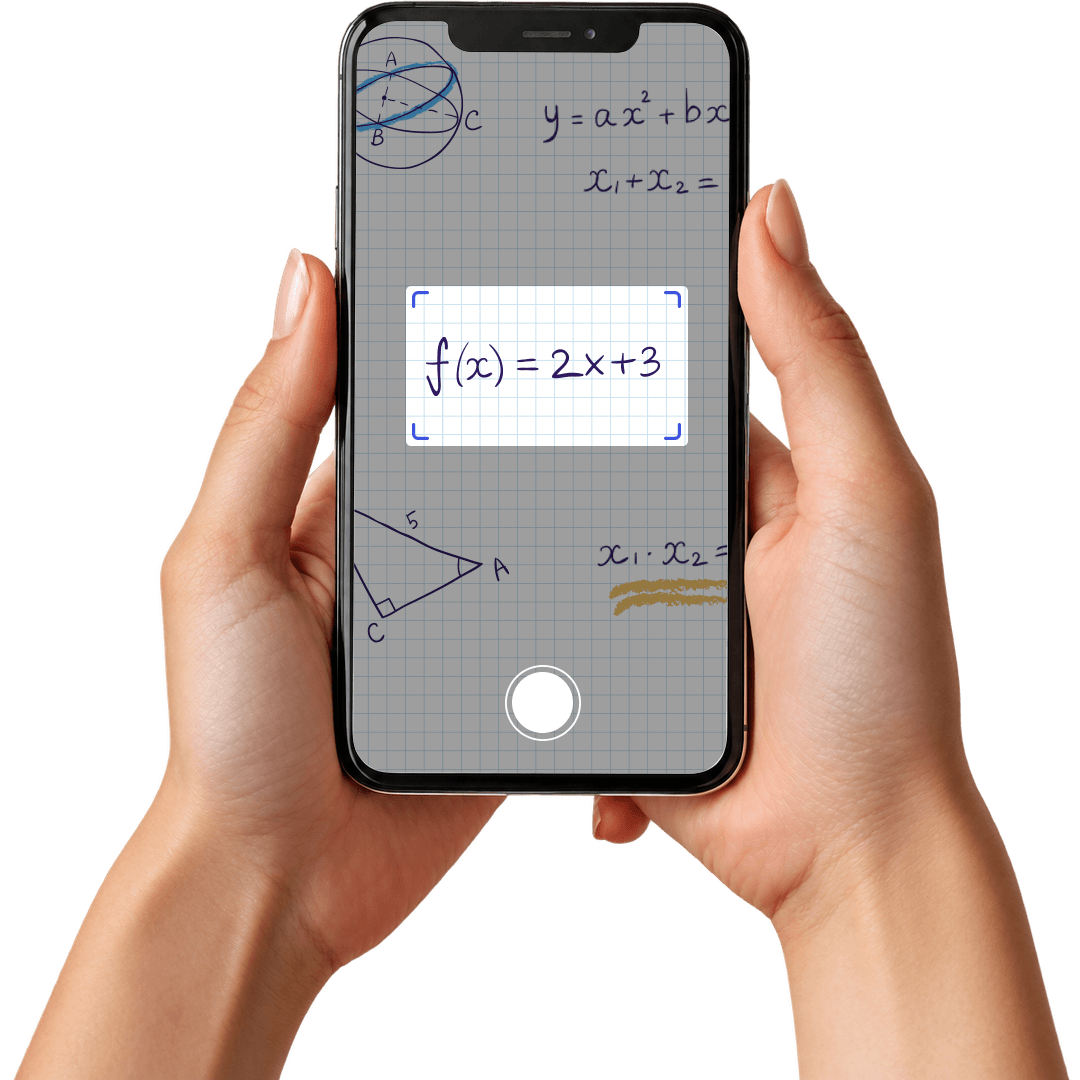
Astra AI is an option for the gaps in between. You can snap a photo of any question and the tutor walks you through it step by step, at your level, asking you questions back instead of just giving the answer. Exam Prep builds a topic by topic plan around your exam date and your own notes or past papers, and you can sit timed mock exams that are graded. You can start free, no card required, and Astra AI Plus unlocks unlimited tutoring, mock exams and podcasts. It helps most students, not all. The honest limitation: an AI tutor is not an IB examiner, so check its working against the official markscheme and your teacher's feedback, and never use it to write your internal assessment for you. For an overview of everything Astra offers for IB, see Astra IB Math or the general exam prep page.
What to do this week
- Ask your IB coordinator for your May 2027 paper times, or check them on the official IB timetable.
- Get the assessment outline from your course's subject guide.
- Rate every subtopic red, amber or green.
- Start your error log with one past paper question you got wrong.
Seven months is plenty if you use them. Start with the list, and let the plan carry you to May.
Frequently asked questions
When are the IB math exams in 2027?
They take place in the May 2027 exam session. Exact paper days and start times depend on your course, level and exam zone, so confirm them on the official IB timetable or with your school's IB coordinator.
Is IB Math AA or AI harder?
Neither is simply harder. AA leans toward algebra, calculus and proof style reasoning, while AI leans toward modelling, statistics and using technology. The better choice depends on your strengths and the university courses you are aiming for.
Can I use a calculator in every IB math paper?
Not necessarily. Calculator rules depend on the course and paper. Check the assessment outline in the IB Mathematics subject guide for your course, or ask your teacher.
How many past papers should I do?
There is no official number. A realistic target is one full timed paper per week from March, with topic practice from older papers before that, and every lost mark recorded in an error log.
Stuck on a problem? Just scan it.
Snap a photo of any question and the AI Tutor walks you through it step by step, until it actually clicks.
Try for free