Best AI for biology in 2026: what actually helps you learn
The best AI for biology depends on what you need: a tutor that explains processes and quizzes you, or flashcards for vocabulary. We compare ChatGPT study mode, Khanmigo, Quizlet and Astra AI from their own pages.

Short answer
The best AI for biology is the one that makes you explain the process back, not the one that writes the neatest answer. For most high school and early college students, that means a tutor style tool that asks questions, works from your own notes and quizzes you afterwards. ChatGPT's study mode, Khanmigo and Astra AI all try to work this way. Quizlet is still the strongest pick if what you really need is to memorize a long list of terms.
Here is the quick version:
- You need to understand processes like the Krebs cycle, mitosis or the immune response: pick a tutor style AI (Astra AI, Khanmigo, or ChatGPT in study mode).
- You need to memorize vocabulary for a unit test: use flashcards with spaced practice, such as Quizlet's Learn mode.
- You are already on Khan Academy in the US: Khanmigo plugs into those videos and exercises.
- You want a plan built around your own notes and test date: that is what Astra's Exam Prep is built for.
The rest of this guide explains how we compared them, where each one is weak, and how to use any of them without fooling yourself.
What a good biology AI has to do
Biology is not math. You rarely solve one problem with one right answer. You learn systems: how a signal moves through a cell, how a change in one hormone shifts three others, how a mutation shows up in a population. So we judged each tool on four things that matter for biology specifically.
1. Explain processes in order. A good explanation of cellular respiration goes step by step, says where each step happens and what goes in and out. A bad one gives you a paragraph with all the right words in the wrong order.
2. Work with diagrams and your own material. Half of biology lives in diagrams: the heart, the nephron, a cell membrane, a food web. A useful tool lets you snap a photo of the textbook figure or upload your class notes and ask about them.
3. Quiz you, not just tell you. Reading an explanation feels like learning. It mostly is not. The tool should ask you questions, wait for your answer and tell you what you got wrong.
4. Admit what it does not know. Every AI can be wrong. In biology the danger is a confident answer that sounds right, like a wrong step in the electron transport chain. Tools that say so openly, and push you to check against your textbook, earn more trust.
The options compared
We read each tool's own website and help pages on 14 October 2026. We only list what those pages say. We did not run accuracy tests, so we do not rank the tools by "how often they are right".
| Tool | How it teaches | Works from your notes or photos | Quizzes you | Price, as shown on its own page |
|---|---|---|---|---|
| ChatGPT study mode | Asks questions and guides you step by step instead of only giving the answer | Yes, notes, slides, PDFs and photos can be uploaded | Yes, on request | Available on all ChatGPT plans |
| Khanmigo | Built to guide you to the answer and not give it to you | Works on Khan Academy's own content library | Practice on Khan Academy exercises | $4 a month or $44 a year, US only |
| Quizlet Learn | Personalized study path through a flashcard set | Your own or shared flashcard sets | Yes, several question types | Part of Quizlet Plus; a free session lets you try it |
| Astra AI | Tutor explains step by step, gives hints first, splits big units into mini lessons | Yes, notes, slides, past papers or photos | Yes, targeted questions after each concept, plus quizzes and mock exams | Free to start, no card; Astra AI Plus for unlimited tutoring |
ChatGPT study mode. According to OpenAI's help page, study mode can ask questions, guide your thinking, explain ideas step by step and check your understanding. You can upload class notes, slides, a textbook excerpt or a photo of a problem. The page even uses an intro biology exam on enzymes as an example prompt. The honest catch, also on that page: study mode "can make mistakes", may sometimes give a direct answer, and does not replace your teacher or course materials.
Khanmigo. Khan Academy's learner page says Khanmigo never gives you the answer and is built into Khan Academy's content library, including science. It costs $4 a month or $44 a year. The limits are real, though: you must be 18 or older, live in the United States and have a US billing address, and students under 18 need a parent to sign up for them.
Quizlet Learn. Quizlet's help center describes Learn as a personalized study path through a set, based on your goals and how well you know the terms. It is part of Quizlet Plus, and non-subscribers can start a free session to see how it works. It is excellent for terms and definitions. It is not built to explain why a process happens.
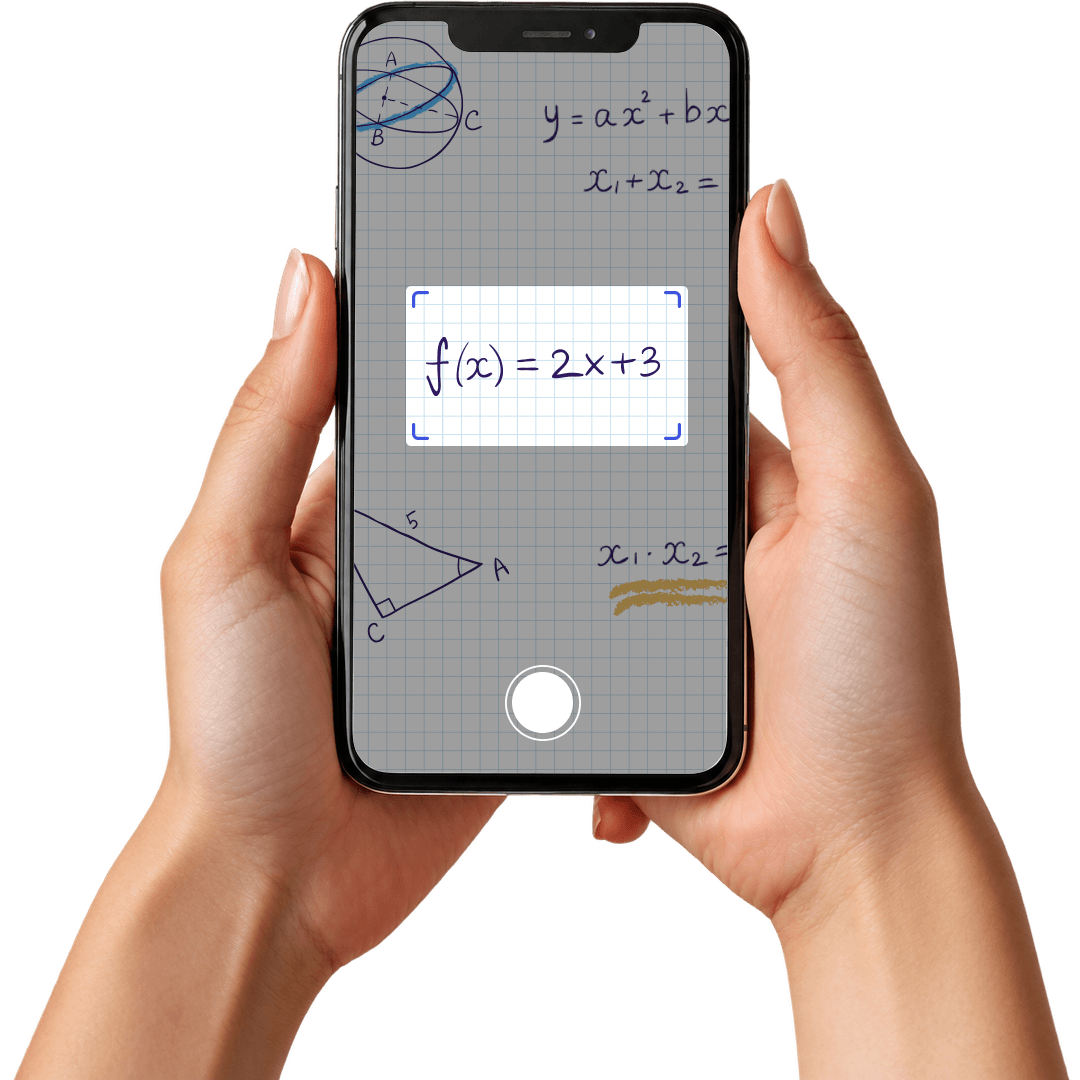
Astra AI. Our own tool, so judge it as hard as the others. On the biology page, Astra explains processes like photosynthesis and cellular respiration step by step, shows hints before the full steps, splits heavy units into mini lessons and asks targeted questions with instant feedback when you finish a concept. You can snap a page from your textbook and ask about it, and there is a 3D cell you can turn and explore. With Exam Prep you set your exam date and add notes, slides, past papers or photos, and it builds a topic by topic plan. You can start free, no card required, and Astra AI Plus unlocks unlimited tutoring, mock exams and podcasts.
Meet your tutor, free.
Snap a problem or ask your first question and see how fast it clicks. No card, no setup.
How to use AI for biology without fooling yourself
The biggest risk with any biology AI is not a wrong answer. It is the feeling that you understood something because you read a clear explanation of it. Here is a routine that works with any of the tools above.
Explain first, ask second. Before you ask the AI about meiosis, write down what you think happens, in order, from memory. Then ask the AI to check your version and point out what is missing. You will learn far more from its corrections than from its explanation.
Draw it, then compare. For anything with a diagram (the heart, the nephron, the light reactions), sketch it from memory and label it. Photograph your sketch and ask the AI what is wrong. This is the closest thing to an exam question you can practise at home.
Ask "why", not "what". "What is osmosis?" gets you a definition. "Why does a red blood cell burst in pure water?" makes you use it. Exams test the second kind.
Check against your textbook or teacher's notes. Your exam is written by your teacher or exam board, not by an AI. If the AI uses a term your textbook does not, or the steps are in a different order, go with the textbook and ask your teacher.
Close with a quiz you did not write. End every session by asking the tool to quiz you on the topic, one question at a time, without hints. If you get under about three out of four, you are not done yet.
Where AI falls short in biology
Being honest about limits is part of choosing well.
Lab work. No AI can focus a microscope, run a gel or do a dissection for you. Practical skills and lab write ups need real lab time and feedback from your teacher.
Very recent research. Textbook biology changes slowly, but research moves fast. If a question touches something new, an AI may give an older answer with full confidence.
Confident mistakes. All of these tools can be wrong. OpenAI says so about study mode, and the same is true for Astra: AI can make mistakes. A wrong step in a pathway can look perfectly reasonable, which is exactly why the "check against your textbook" habit matters.
Astra's own limits. Astra is strongest when you give it your own material and a date to work toward. If you just want a fast definition, a search or your textbook glossary is quicker. And like any app, it only helps if you open it; it will not sit next to you and make you study.
When a human tutor is the better call
For most students, a good AI tutor covers what they need, especially for understanding processes and practising questions. Not for everyone, though. A human tutor is worth it if:
- you are far behind and need someone to rebuild the basics with you week by week,
- you need help with lab reports or coursework that your teacher grades in a specific way,
- you struggle to start studying at all and need someone who expects you at a fixed time,
- you are aiming for top marks in an advanced course and want detailed feedback on long written answers.
Many students end up mixing both: a few hours with a tutor for the hard parts, and an AI tool for daily practice in between. If you are also taking chemistry, our guide to the best AI chemistry tutor uses the same approach, and so does our pick of the best AI for physics. And if a test is coming soon, see how Exam Prep turns your notes into a plan.
Frequently asked questions
Which AI is best for biology?
It depends on the job. For understanding processes, pick a tutor style AI that asks you questions, such as ChatGPT in study mode, Khanmigo or Astra AI. For memorizing terms, a flashcard tool like Quizlet's Learn mode is hard to beat.
Can AI read biology diagrams?
Several tools let you upload a photo of a diagram or textbook page and ask about it. ChatGPT study mode accepts photos and PDFs, and Astra lets you snap a page from your textbook. Always check the labels against your textbook, because AI can misread a figure.
Is AI good for AP or IB Biology revision?
It can help you understand topics and practise questions, but your exam is written by the exam board. Use AI to explain and quiz, then practise with your course's official past papers and mark schemes.
Is it cheating to use AI for biology homework?
Using AI to understand a topic or check your own answer is studying. Handing in AI written work as your own usually breaks school rules. Follow your teacher's AI policy, as OpenAI's own help page also advises for graded work.
Stuck on a problem? Just scan it.
Snap a photo of any question and the AI Tutor walks you through it step by step, until it actually clicks.
Try for free