
How to Study the Night Before an Exam

Studying the night before an exam is common, and it often goes badly. Some advice says to relax and sleep. Other advice says to push through all night. Neither is quite right.
How well a one-night cram works depends mostly on method. A student who crams the wrong way for six hours can score worse than one who crams the right way for two. The difference is technique, not effort or smarts.
Why most last-minute cramming fails
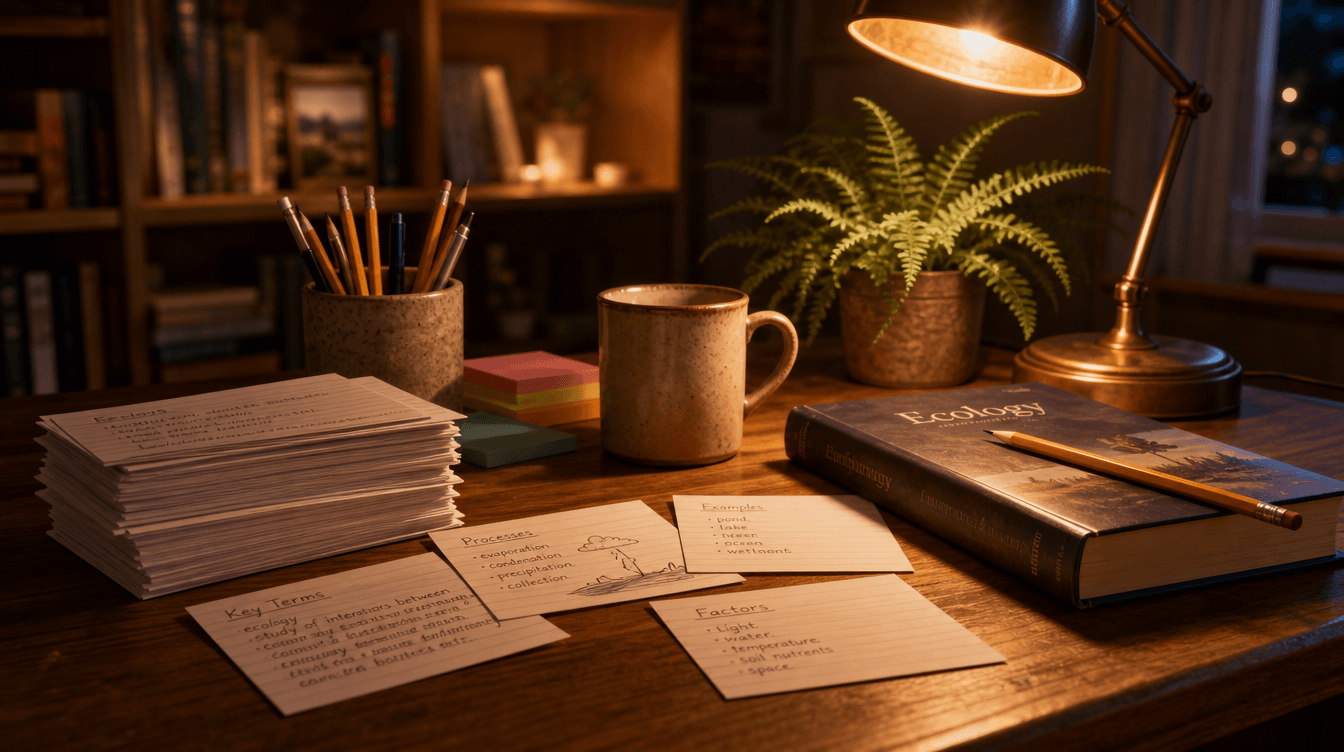
Most crams fail because they train recognition, but exams test recall.
Recognition is the feeling of "I know this" when the answer is in front of you. Recall is producing the answer from a blank page when it isn't. The two feel similar while you study, but they use memory in different ways.
Rereading and highlighting train recognition. So does reading a clean explanation from a chatbot. You finish the night sure you know the material, then get a blank exam paper and find you can't produce it.
The name for this is the illusion of competence. Every time you reread something, it feels more familiar, and your brain treats that familiarity as proof you've learned it. It isn't. It's the surface of learning, not the real thing.
Using a general AI to study adds a second risk. These tools are usually correct, but they sometimes produce a mistake: a dropped minus sign, a swapped definition, a step that doesn't hold. If you already know the topic, you catch it. If you're learning it for the first time, you can't, so you memorize the error. A wrong answer you feel sure about is worse than a blank, because you never go back to check it.
These problems come from how memory works under pressure. Before fixing them, it helps to know two limits no method can beat.
Two limits you can't beat
Two things set a hard ceiling on what one night can do. Plan around them instead of fighting them.
The first is 
The second is sleep. Sleep is part of studying, not a break from it. While you sleep, your brain locks the day's learning into longer-term memory so you can recall it under pressure. Skipping sleep does double harm. It weakens the memories you just made, and it leaves you slow and unfocused in the exam. Trading sleep for two more chapters is one of the worst swaps in studying, and it's the one students make most.
Together these set a realistic goal. You won't learn everything in one night. You can learn the right things well enough to recall them, on a rested brain. For most exams that's enough to pass, and often enough to do well. The next section is the plan for doing exactly that.
How to study the night before an exam

1. Triage before you study anything
Don't study in the order the material is printed. Chapter one is rarely worth the most marks, so starting there wastes your sharpest hours.
Spend the first fifteen minutes deciding what to learn, not learning. Gather anything that shows what's on the exam, like past papers, the syllabus, a topic list, or hints from your teacher. Then sort everything into three groups:
- High-value topics that carry a lot of marks and show up often.
- Topics you already half-know and could lock in fast.
- Everything rare, low-value, or too hard to learn tonight.
Skip the third group on purpose. That choice is what makes the night work. Spreading your time evenly leaves you knowing a little about everything and enough about nothing.
2. Use active recall, not rereading
Study the high-value group first, then the half-known group. Test yourself the way the exam will.
Active recall means closing the book and forcing the answer out of your own memory. It feels harder than rereading, and that's the point. Pulling information out is what strengthens it. Rereading feels productive but changes little.
A few formats work fast under time pressure:
- Make flashcards, on paper or in an app, and test yourself instead of reviewing.
- Work a problem fully on paper, then redo it from a blank page.
- Explain a topic out loud, to a person or your phone camera. Where you stumble is what to fix next.
When you hit something you truly don't understand, pick help that shows the reasoning, not just the final answer. An explanation you can repeat later beats an answer you copy and forget.
3. Protect your focus and your sleep
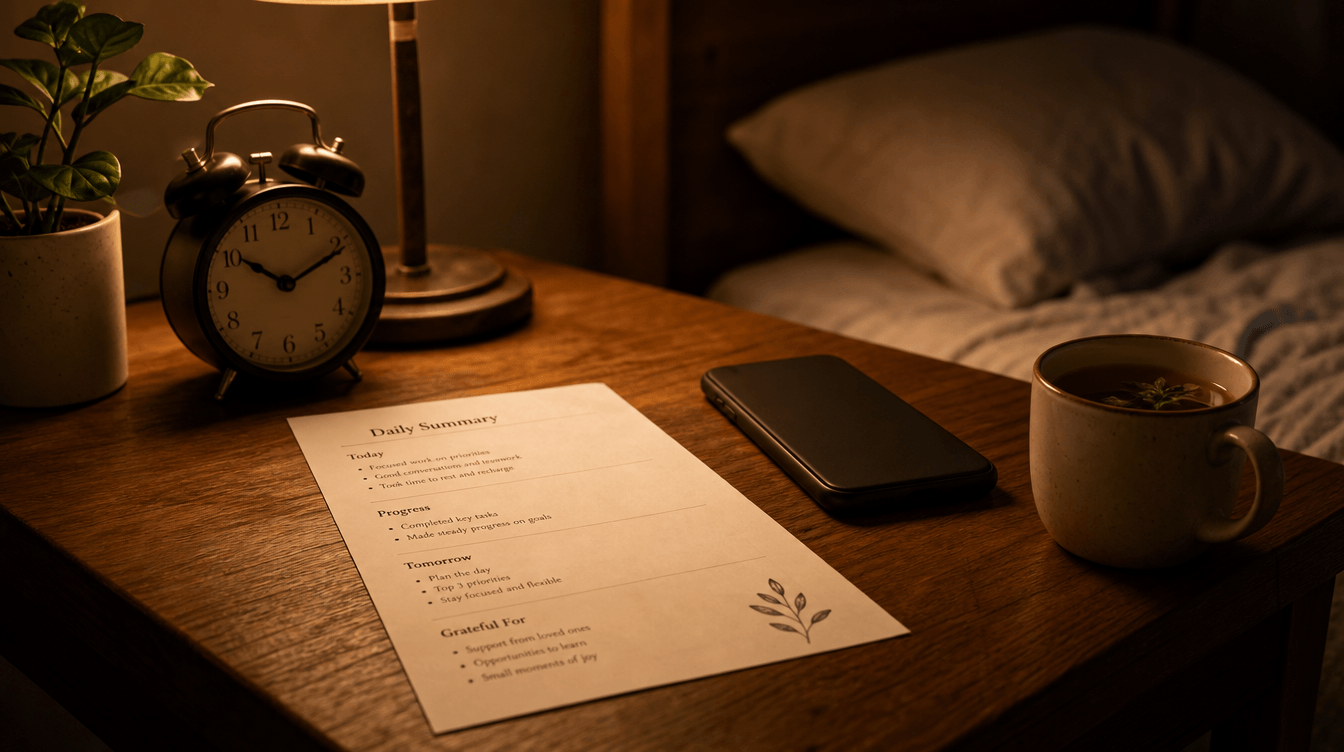
Study in focused blocks of about ninety minutes, with real breaks between them. Focus runs out like a battery. A ten-minute break to move, drink water, and eat something that isn't pure sugar refills it.
Then set a firm stop time that leaves about seven hours of sleep. Lay out everything you need for the morning so nothing gets hunted for at 8:15. Do one calm pass over your flashcards or a one-page summary, not to learn anything new, but to put the key material at the front of your mind before bed. Reviewing right before sleep is linked to better recall the next morning. Then stop.
4. Handle exam morning
Eat a proper breakfast, arrive early, and review only your top flashcards. Starting a new topic in the hallway adds nothing and raises stress. So does letting a nervous classmate quiz you on the material you chose to skip. You made that call last night for good reasons.
Paper and discipline are enough to run this plan. A few parts, though, are easier with a tool built for studying.
Where a study tool can help
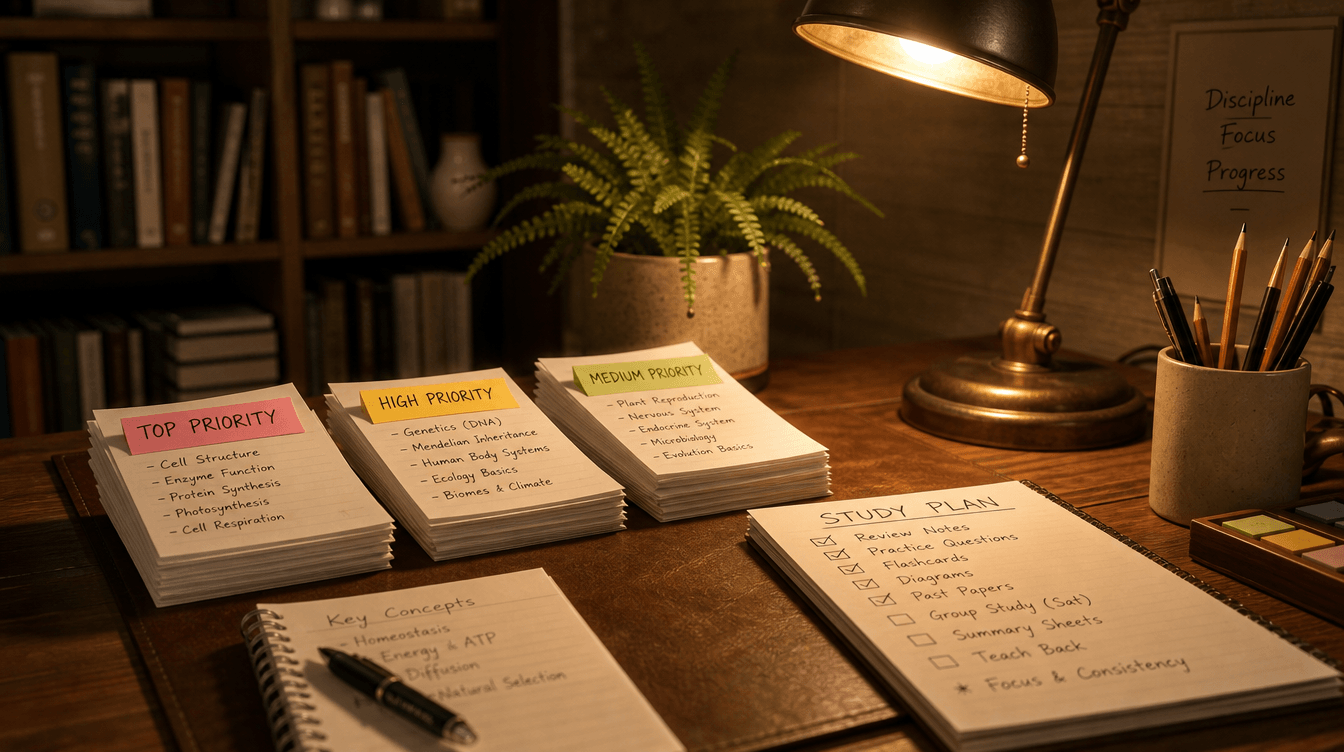
Three parts of a cram take the most effort. You have to decide what to prioritize, get unstuck on a hard problem late at night, and check whether you actually know something. You can do all three with free or manual methods. Past papers handle triage, flashcards handle self-testing, and a worked solution handles a stuck problem.
Some study tools combine these.
Which tool fits depends on what you're doing, and on the stakes.
When to use a general AI versus a study tool
Different tools fit different tasks. A general AI like ChatGPT is fast and flexible for low-stakes work, such as rephrasing a dense paragraph, giving a quick overview of something you half-know, brainstorming essay angles, or drafting a schedule. For getting the gist, it's a sensible choice.
For graded work, two things matter more than speed. The answer has to be correct, because a confident mistake becomes a memorized mistake. And you have to be able to produce the reasoning yourself in the exam. A tool that guides you through problems and tracks what you've learned fits that need better than one that just returns answers.
The dividing line is the stakes. Use a quick general tool for things that don't count toward a grade. Use a study-focused method or tool when marks are on the line. The night before an exam sits firmly on that second side.
Conclusion
A one-night cram works when you treat it as strict prioritizing plus self-testing, not cover-everything rereading. Triage first, study the high-value and half-known topics with active recall, protect about seven hours of sleep, and review your top flashcards in the morning. You won't learn everything, but you can learn enough to do well.
FAQ
Is it better to sleep or study before an exam?
Sleep, in nearly every case. While you sleep, your brain locks in the day's studying so you can recall it under pressure. Staying up to cram weakens that for the very material you stayed up to learn, and it leaves you slow and unfocused the next morning. A firm cutoff that protects about seven hours, plus one calm review pass before bed, beats an all-nighter.
Can you really cram for an exam in one night?
You can cram enough to pass, and often enough to do well, but only if you triage hard and self-test. Focus on high-value topics and material you already half-know, and skip the rest. Rereading everything fails. Strict prioritizing plus active recall works.
What should I study first when I'm cramming?
Not chapter one. The printed order has little to do with what carries the most marks. Spend fifteen minutes finding what's likely on the exam, using past papers, the syllabus, and any hints from your teacher. Then study topics that are both high-value and realistic to learn tonight, starting with anything you already partly remember. Skip what's rare, low-value, or too hard for one night.
What's the best app for last-minute exam prep?
Pick whatever helps you learn correctly and test yourself, not one that just gives answers. Flashcard apps like Anki handle self-testing, and lesson tools like Khan Academy explain concepts, but each only does part of the job. Astra AI brings all three together (triage, self-testing, and step-by-step help), which makes it the strongest choice when time is tight. Whatever you use, pick the tool you'll actually rely on to check your work, since an answer you trust but got wrong is worse than no answer.

"अगली पीढ़ी के लिए"